
It is May 2026. Fleeing from a crowded BitSummit convention in the Miyako Messe, Kyoto, I’m searching for a small Japanese coffee shop. I’ve got an appointment with the creator of one of my favorite games from the last five years, Umurangi Generation. It was a fascinating debut game for Naphtali Faulkner, nicknamed Tali (He/Him). As a Māori artist from New Zealand, his work is vocally explicit against colonialism, genocide and the influences of the northern hemisphere.
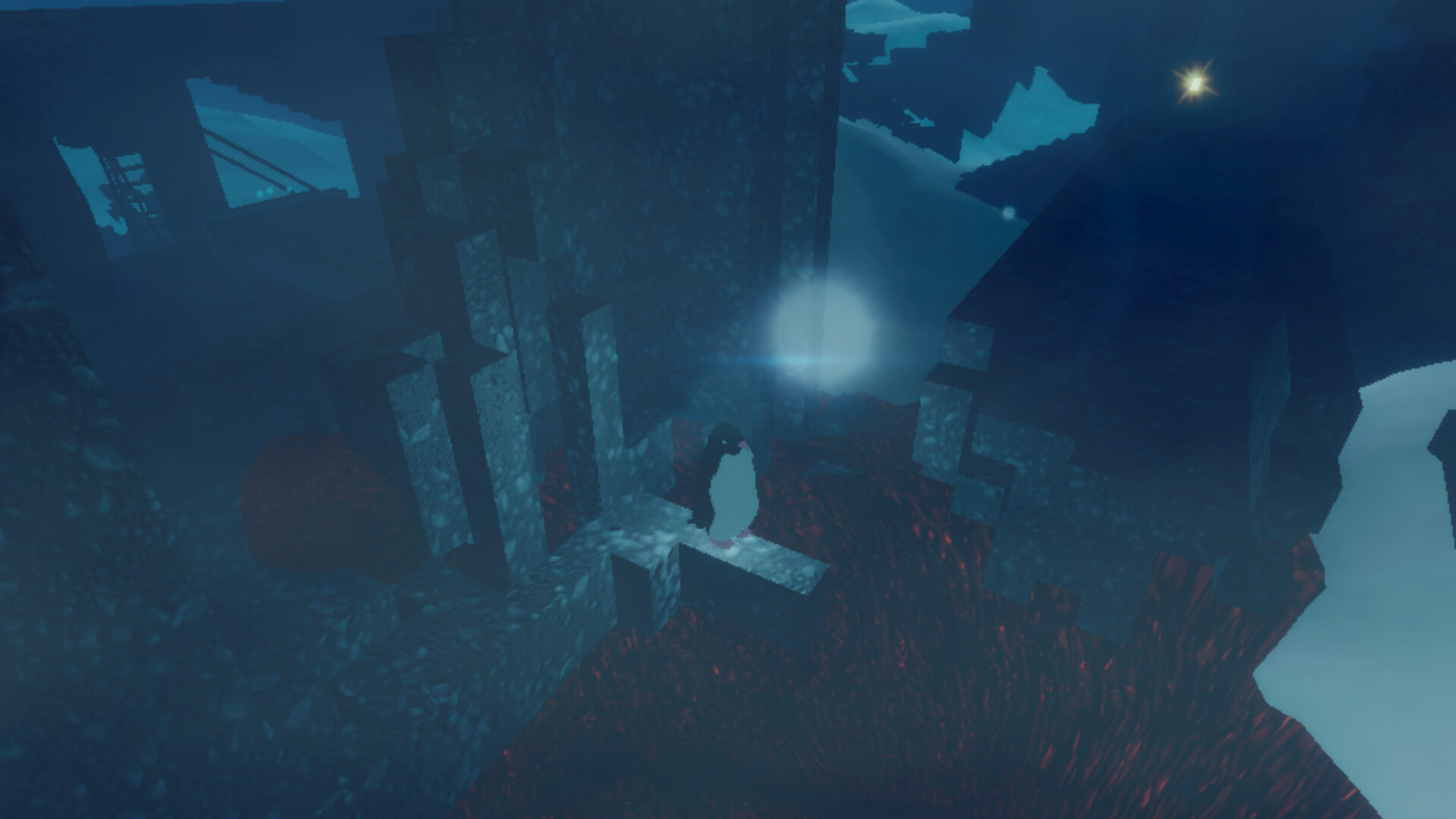
Tali hands me his Steam Deck to play the demo for his next game, in which he’s bringing all these themes together: Penguin Colony. I’m all set to explore the Antarctic as a penguin and ask Tali all sorts of questions. But the owner of the coffee shop makes it clear that in this traditional establishment devices are not allowed. Pretty embarrassed, we put away our stuff, including my microphone and begin talking.
Making games as a form of art
We end up chatting for over an hour. About games, about politics, what it means to create a game as someone of Māori descent and how he’s joined a left-wing art collective in Melbourne. It’s the end of July when we meet once more through a video call. On Tali’s recommendation a fellow artist from Melbourne joins our conversation, Cécile Richard (They/Them), who made their own debut with the game Novena and is currently working on Parasensor. Because I want to know more about creating art games in Australia.
“Art is like a muscle,” says Tali. “One that you actually have to maintain or grow.” For over fifteen years he’s been working as an artist. One of his first inspirations was Del Catherine Barton, who primarily works with watercolors, liner pens and other affordable materials. During his time in University he did a double degree in filmmaking and media design.
That art remains relevant until the problem is solved
Tali Faulkner
He started making animations in Flash, but then someone recommended him to try out this game-making engine called Unity. When it seemed like he would lose his job, he began making his own game: Umurangi Generation. He created the game in only ten months.
Tali attributes the success of the game to fortunate timing: “I think it had a lot of relevance to the time it was made.” In Umurangi you play as a freelance photographer in Aotearoa (the Māori name for New Zealand, red.), who captures the invasion of enormous monsters, but also shows the impact of the United Nations, who are repressing the local inhabitants under the guise of ‘Emergency Aid’. The focus on the effects of colonialism weren’t his starting point, but did become a throughline in his work.
“I started to realize that the best art, or the art that I tended to enjoy, was art that was really inherently political. The reason that that art tends to stay around is because it remains relevant until the problem is solved.”
It is precisely in Melbourne, where artists try to push the boundaries of the medium, that Tali and Cécile find immense inspiration. The games industry in Australia is less than twenty years old and started finding success around the introduction of the iPhone. That young history means that nothing is yet set in stone.
It is the ideal breeding ground for working with artists, Tali believes. In particular because Australia is geographically so far removed from the rest of the world. Cécile adds: “Experimentation here is able to flourish to an extent because there’s no supervision.” It’s these ideas that they are trying to pass on to other game creators and artists across the world.
Manifesting Manifestos
Earlier this year Cécile organised ‘Manifesto Jam’. A call for everyone to write their own manifesto about games. Over 300 manifestos were submitted as part of the jam. Cécile’s own manifesto, called ‘Against Gratitude’, was a call to bite the hand that feeds you. A rejection of the dependence of game makers to those who keep exploiting their labor and their passion. They argue that as a creator you should remain independent and critical, even if your livelihood depends on it. Artists have to reclaim their autonomy.
“It is this idea that you can’t decide for me what my work means,” says Cécile. “The only time an artist truly owns the art that they’re making is when they’re making it. You want to embrace that. Don’t think: ‘What if the person that I invented in my head doesn’t like it?’ Just kill that person. They do not exist. That’s where my mind is at in terms of biting the hand. Embrace the ungratefulness by laying claim on your own work and reclaiming it from the pressures of professionalised game making.”
When I ask them whether this all isn’t a little bit performative, Cécile begins to laugh. “Ultimately it’s all rhetoric, right? A manifesto is absolutely one hundred percent performance.” They continue: “It is about this bravado and making yourself bigger than you actually are and then believing in it. It’s this really interesting conversation that comes out of that. It is also about the idea of providing a space to not be grateful. To be like, you don’t have to just settle for this, you can ask for more.”
In Tali’s manifesto, ‘Gameplay Never Mattered’, he pushes back against game creators who are only focused on gameplay. He writes: “We don’t need experimental gameplay, we need experimental everything else. We need you to stop treating this medium like it’s the 80s. Genre conventions work. The tried and true methods work. Technology already exists. You won’t achieve anything masturbating to how well you think you understand games as an art form. You have to demonstrate that by making art.”
Statements for which, according to Tali, you’d receive a lot of criticism within the indie games scene. “I think game developers need a big kick in the teeth as to what they’re doing wrong. There should be really an air of disrespect around this very septic-minded game design. Design that is not actually backed up by anything other than convention.”
The American cesspool of game development
‘Septic’ is Australian slang for Americans. Back during World War II, when Americans were stationed on the continent and began dating local girls, the term “Yank in a septic tank” originated. Nowadays it is occasionally shortened to ‘seppo’. It stuck around as an insult to refer to this America-centric worldview.
That dominant American perspective has, according to Tali and Cécile, poisoned the creative process. Managers and CEO’s of game companies do not play games themselves and present their products as things that will ‘disrupt’ the market. It gets Tali worked up: “They don’t realize disrupting something is annoying as fuck and people want to beat the shit out of someone who’s disrupting.”
The solution to these problems? “Unionize every single worker. I refuse to believe it has been more than twenty years of people talking about these problems and people still pretend to not know.”
This resentment runs deep within Tali. As a Māori he is treated differently within the games industry. An industry that is pretending to be progressive, but where criticisms of systemic problems, racism and genocide are silenced. “I had my ’turning-my-back-on-the-games-industry-moment’ about two years ago,” Tali reflects.
“I just realized they don’t give a fuck about indigenous people. Indigenous people can be genocided in front of them for three years straight and they will not do anything. They won’t even ban those doing the genocide from coming to their events. I realized that what they’ve said about wanting us here in the industry means fuck all.”
Our own spot in the industry
At the end of one of his talks, Tali was asked by a representative for Melbourne International Games Week how they could better support indigenous people. Tali was bitter. They had already submitted a request to be given their own room, with their own programming during the week. But it was consistently ignored. He replied with a question of his own. Had their request even reached the board?
It remained quiet. They did not get their own program.
He doesn’t mince words. “If an employee phones it in every day and they worked with Indigenous people and they’re the reason the project doesn’t get finished or it goes over budget – it’s all the indigenous people who have a failed game on their resume that don’t get another job. All the non-indigenous people that worked with those indigenous people get an even higher paid position. That’s just how the game’s played.”
We left the coffee shop and found some seats on a patio in Kyoto. In the warm afternoon sun I put Tali’s Steam Deck in front of me. I just finished the prologue of Penguin Colony. Tali looks confident. It was very difficult to find a publisher for the game, he tells me. Especially because of the critical political themes of the game.
Publisher Fellow Traveler (publisher of titles like 1000XResist and Citizen Sleeper) has committed to publish the game and finance its development. Tali is relieved. “Another publisher would’ve probably asked us to tone stuff down, to make it less obvious.”
This is how Tali works on his own commercial projects: with the mindset of an artist. He no longer keeps his politics hidden. Penguin Colony is a scream of resistance in a stagnant industry. “With works like this it is better to be truthful. To not do this whole ‘’two-sides’’ bullshit.”
About Penguin Colony
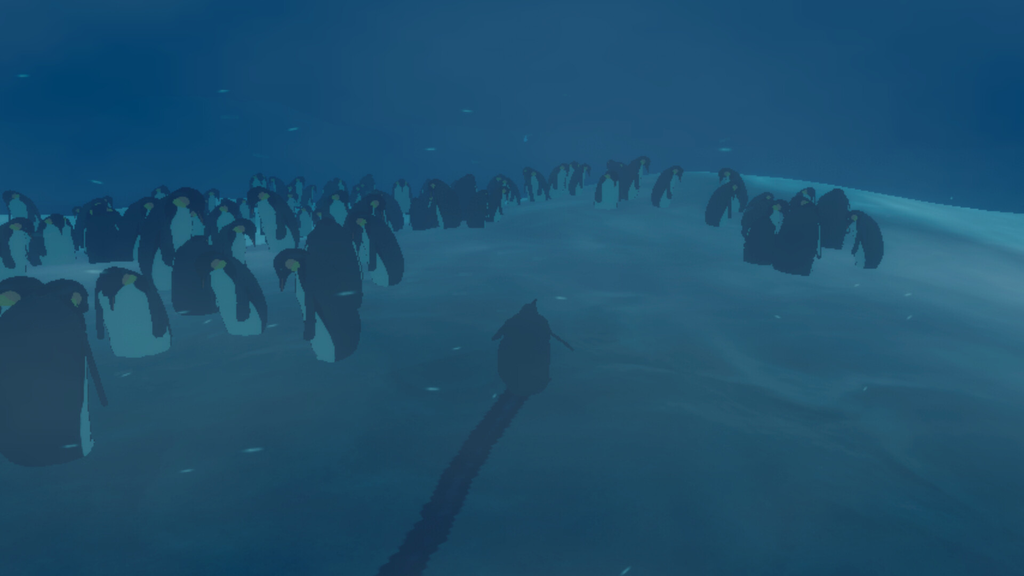
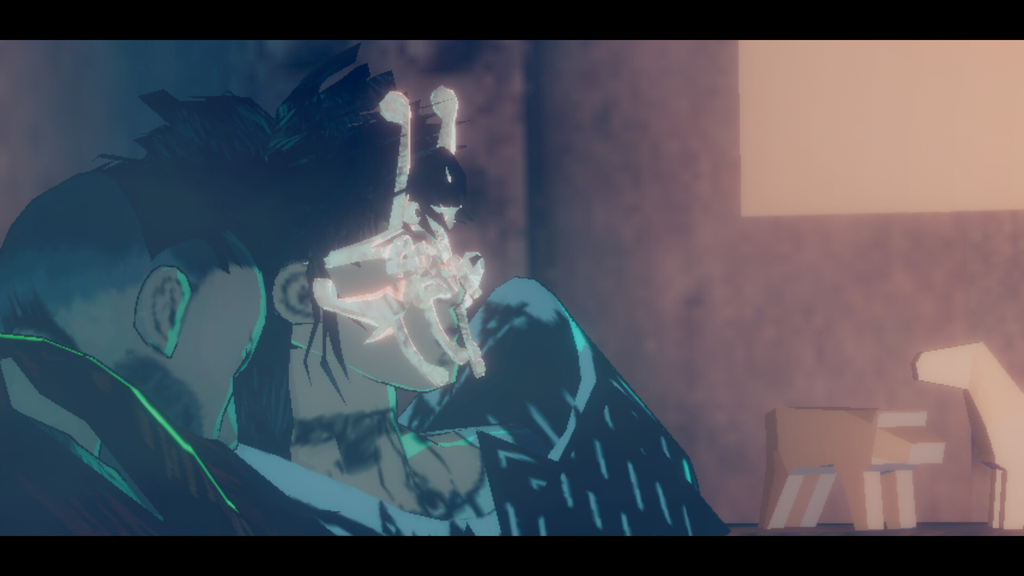
Penguin Colony takes place in the Antarctic, in 1939. Nazis have found a mysterious artefact beneath the ice. They think it’s evidence for their belief that the Aryan Ubermensch truly exists. But the Nazis are obviously not the heroes of this story.
No, that would be the indigenous peoples from the southern hemisphere. Here to tell their own story.
And of course, you play as the true inhabitants of the Antarctic: penguins.
Penguin Colony releases October 16th on pc. This is a translation of an article originally written and published in Dutch on the independent, creator-owned Dutch video games website Unpause.nl.
